
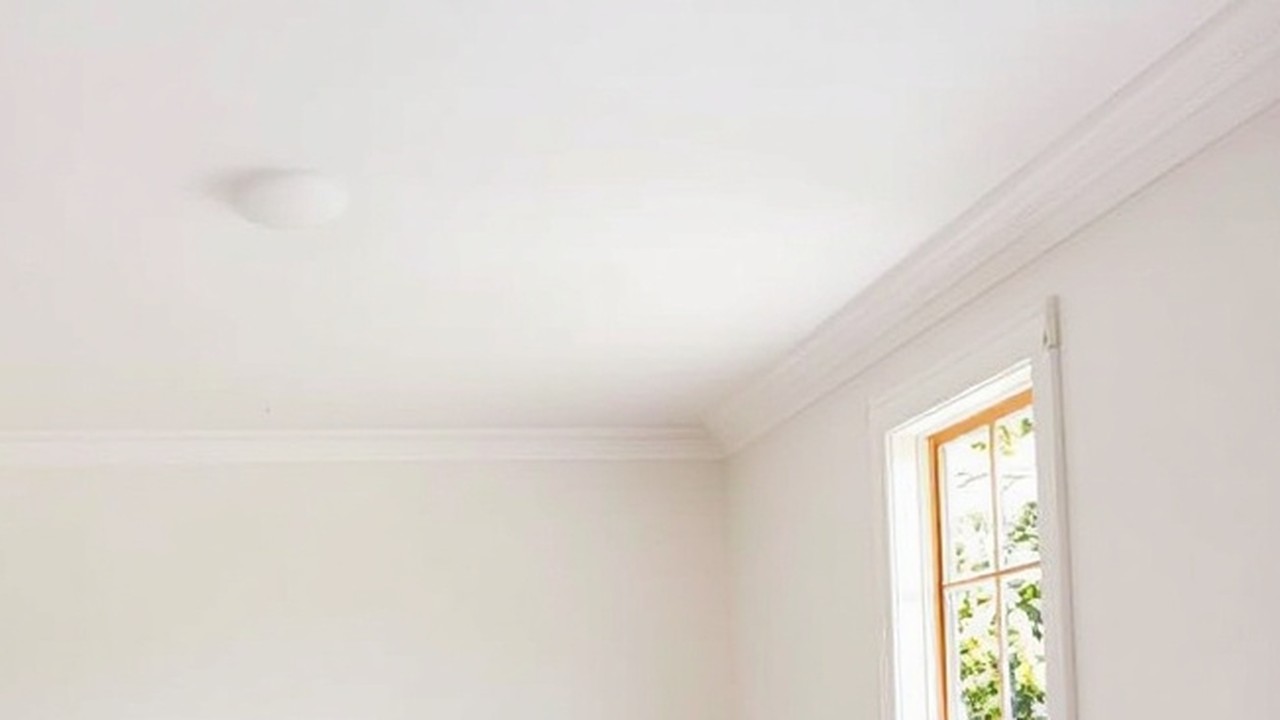
For most Brisbane ceilings, the right ceiling paint is a flat white made for ceilings, rolled over a sealed and properly prepared surface. Bathrooms, laundries and kitchens are the exception: there, a paint made for wet or humid rooms holds up better against steam and mould. New plaster needs a sealer before any of it.
That covers most homes. The rest comes down to the room, the light and what’s already on the ceiling.
Here’s how to pick the right ceiling paint for each room.
Why ceiling paint is usually flat white
Ceilings get light from the side, from windows and downlights. Any shine in the paint picks up that light and shows every bump, joint and roller mark. A flat finish soaks the light up instead, so small marks in the plaster disappear.
That’s why paint sold as ceiling paint is almost always flat.
Choosing a ceiling paint colour
White is the usual colour because it bounces light back into the room and makes it feel taller. There are plenty of whites, though. A cool white suits modern rooms with lots of grey and black. A warmer white sits better with timber floors and older homes, and some people pick the ceiling white to match the trims so the room looks finished. A ceiling doesn’t have to be white, though. Some people tint the ceiling a shade of the wall colour, or go darker in a media room. If you do, flat still matters for the same reason.
Ceiling paint for bathrooms and humid rooms
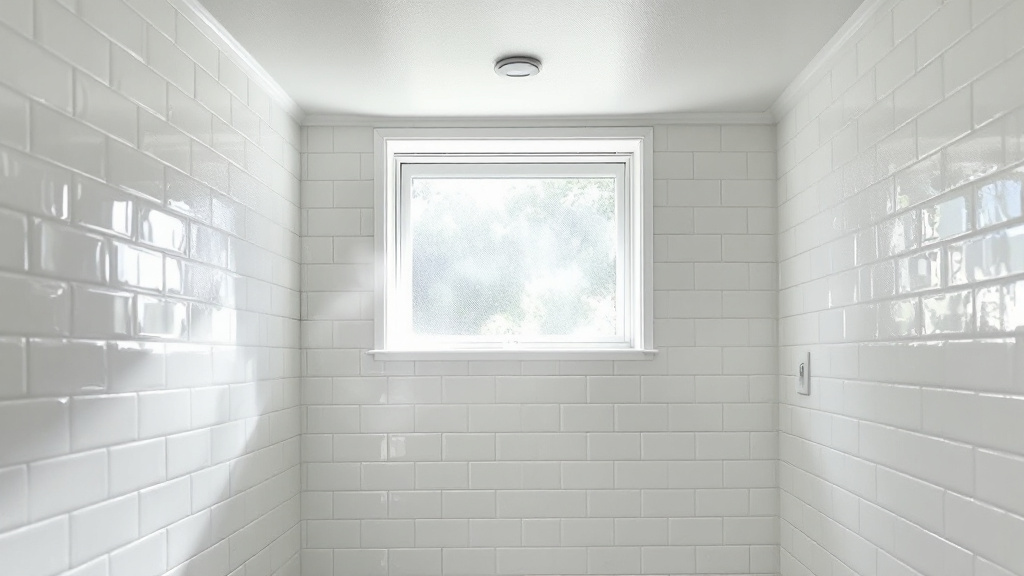
Brisbane’s humid summers make bathrooms, laundries and kitchens hard on ceilings. Steam settles on the coolest surface, and a flat ceiling paint can hold that moisture and start to grow mould.
For these rooms, use a paint made for wet areas. These are usually a low sheen or semi gloss finish with a mould inhibitor, and they handle wiping much better than a flat paint does. You give up a little of the flat look, but in a small room it’s rarely noticeable.
Paint helps, but it isn’t the whole fix. If a bathroom ceiling grows mould every summer, the room needs better ventilation too. An exhaust fan that runs during and after a shower clears the steam before it settles on the ceiling.
Ceiling paint over mould
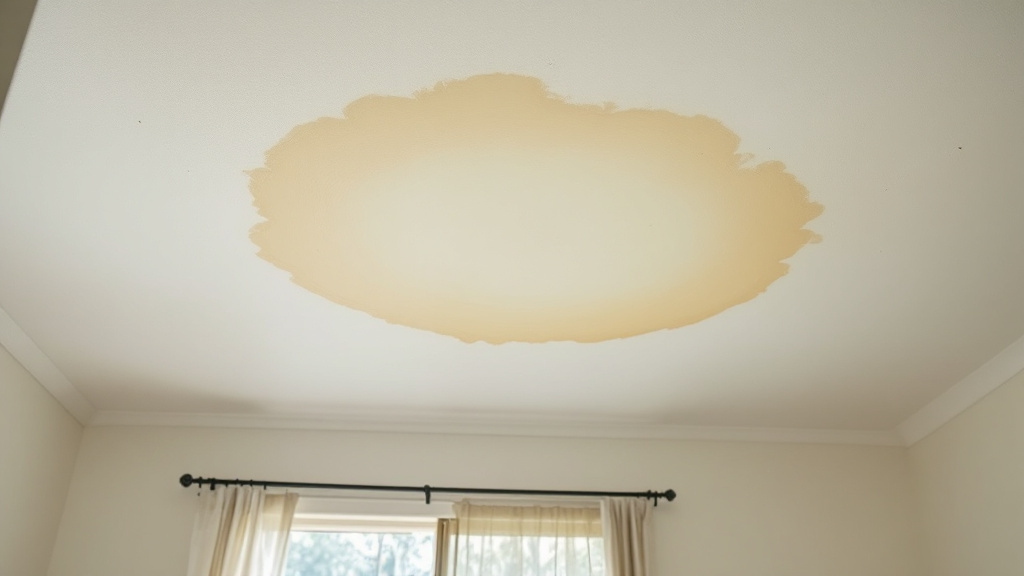
Never paint straight over mould. Clean it off first, let the ceiling dry fully, then seal it before the top coats. If the mould keeps coming back through clean paint, or the plaster is soft or stained right through, the board itself may be damaged and need replacing rather than painting.
Sealer and undercoat before the ceiling paint
The coat under the ceiling paint matters as much as the paint itself. What goes on first depends on the surface.
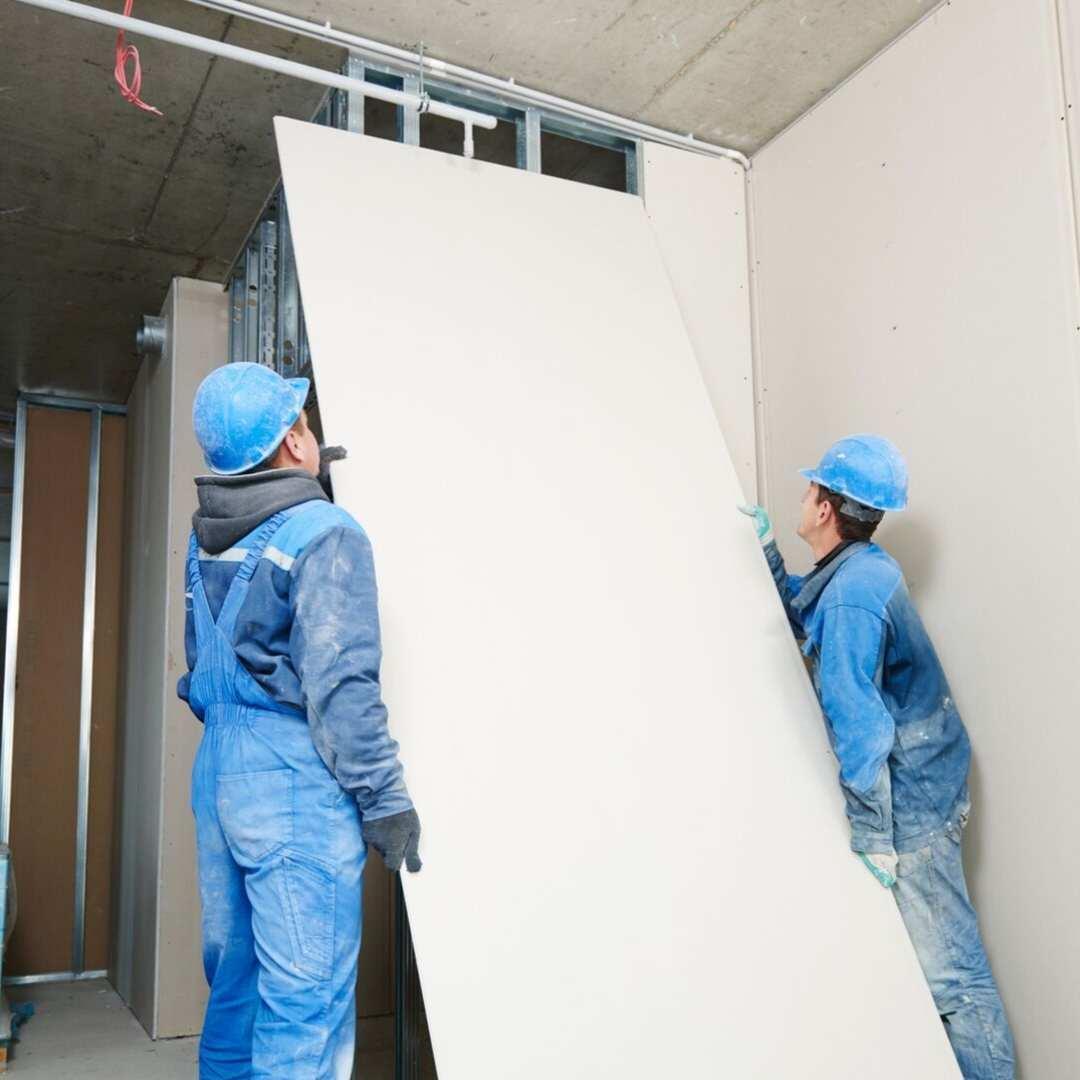
- New plasterboard: Needs a plaster sealer first. Raw plaster and the set joints soak paint up at different rates, and without a sealer the joints show through as dull patches.
- Water stains: Need a stain blocking sealer. Ordinary ceiling paint lets a water stain bleed back through.
- Repaired patches: Need sealing so the repair doesn’t show as a different texture after painting.
- Old, sound paint: Usually just needs cleaning and a light sand where it’s rough.
Our painting page explains how new plasterboard is sealed before the colour coats go on, so the finish comes up even.
The plaster under the ceiling paint
Paint only looks as good as the ceiling underneath it. How smooth the plaster needs to be depends on the light in the room and the paint you plan to use.
A flat ceiling paint forgives a lot. A low sheen or semi gloss paint in a bathroom shows more, so the plaster has to be smoother to start with. If a room has a long window that throws light across the ceiling, even small dips and joints will show. In that case the plaster finish needs to be higher before painting.
This is why cracked joints, nail pops and old patches are filled and sanded flat before any ceiling paint goes on. Paint won’t fill a dip or a crack, so the ceiling has to be flat before it goes on.
Painting a ceiling in an older Brisbane home safely
If you live in an older Brisbane home, the paint on the ceiling may contain lead. The Australian Government’s lead paint guide says homes built before 1970 are most at risk, and warns against dry sanding paint that contains lead (Australian Government, Lead Alert: The six step guide to painting your home). If your ceiling has old flaking paint, get it tested before anyone sands it.
Old ceiling sheeting needs the same care. The Queensland Government says homes built before 1990 are likely to contain asbestos, and since you can’t tell by looking, you should treat the material as if it does (Queensland Government, How to handle asbestos safely after a storm). Don’t sand, drill or cut an old ceiling until you know what it’s made of. A repaint over sound sheeting is a different matter from cutting into it.
How many coats of ceiling paint you need
Two coats over a sealer is standard for most ceilings. It gives an even colour and hides roller marks.
You may need more, or a different first coat, when:
- Going lighter over a dark colour: An undercoat helps the white cover in fewer coats.
- Covering stains: A stain blocker goes on first, then two top coats.
- Painting fresh plaster: The sealer counts as its own coat, before the two top coats.
One coat straight from the tin rarely looks right on a ceiling. The marks show as soon as the light hits it at an angle.
Painting a ceiling yourself or getting a painter
A small, low ceiling in sound condition is a reasonable weekend project if you’re comfortable on a ladder. Cut in around the edges first, then roll in sections, keeping a wet edge so you don’t get lap marks.
It’s worth getting a painter in when:
- The ceiling is high: Stairwells, raked ceilings and two storey voids need proper access equipment.
- The plaster needs work: Cracks, sagging or water damage should be repaired before painting.
- The paint might contain lead: Older homes need testing and safe removal methods.
- You want the whole house done: Ceilings, walls and trims together save time and setup.
What changes the cost of painting a ceiling
A ceiling paint quote depends on the room and the surface more than the paint. These are the things that change it:
- Room size and height: Bigger and higher ceilings take more paint and more setup.
- Condition: Cracks, stains, mould and peeling paint need fixing first.
- Surface: New plasterboard needs a sealer coat as well as the top coats.
- Cornices and roses: Detailed plaster takes longer to cut in.
- Number of rooms: Painting several rooms at once is more efficient than one at a time.
- Furniture and access: Rooms that need clearing or protecting take longer to set up.
For a free quote, contact us and tell us which rooms, what the ceilings are like now and anything you’ve noticed, like stains or cracks. One quote covers the plaster repairs and the painting.
Brisbane Plaster Pro. Call (07) 3064 0686. QBCC Licence 15576119 (MGH Contracting) and QBCC Licence 15511709 (All Paintworx).