
If your home still has its original plaster ceiling roses, keep them. Each one was made for the room it sits in, usually to go with the cornice, and once a rose ends up in a skip the room loses a detail that’s hard to replace. A rose that looks tired, with a crack, a gap at the edge or years of paint filling the pattern, can often be brought back as part of the renovation.
Here’s what you need to know before anything comes down.
Why keep plaster ceiling roses when you renovate
Keep them because an original plaster ceiling rose belongs to the room in a way a new one rarely does. The pattern usually ties in with the cornice, and the size suits the height of the ceiling. Take it down and you’re left with a patched circle in the middle of the ceiling and a light fitting that looks like an afterthought.
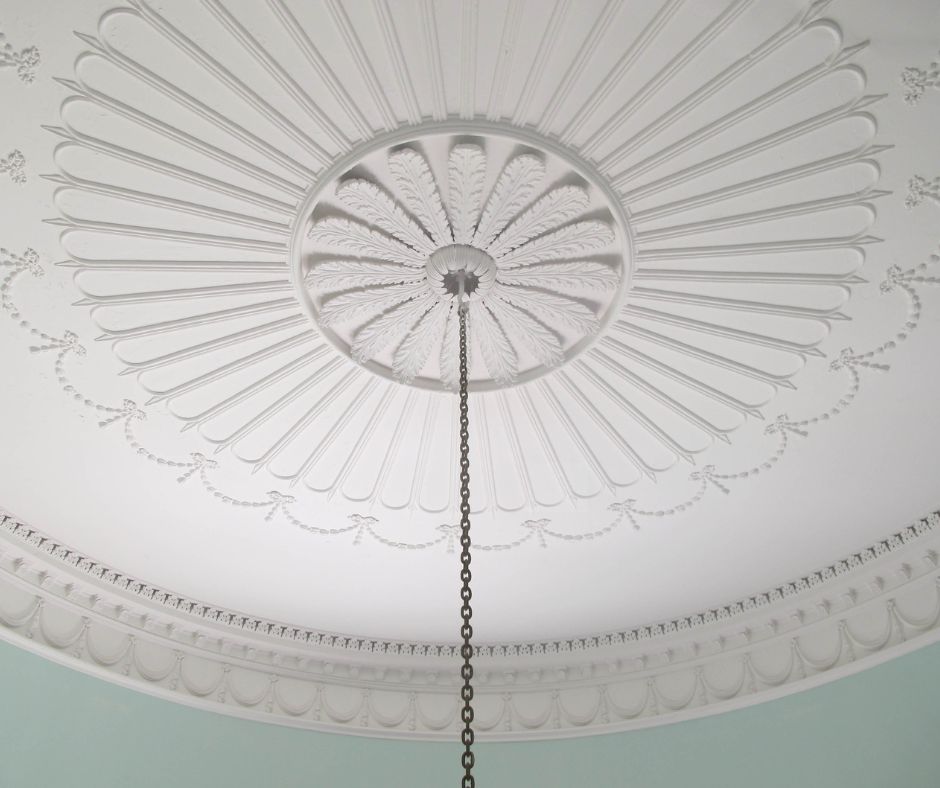
Plenty of older Brisbane homes, Queenslanders included, still have their roses and ornate cornices in the front rooms. If you bought a character home, details like these were probably part of the appeal. A renovation is usually about the kitchen, the bathroom or the layout, and the ceiling roses in the living and dining rooms can come through untouched if everyone on site knows they’re staying.
Matching an original later is harder than people expect, because patterns vary a lot from house to house and a new rose from a catalogue rarely sits comfortably next to an old cornice.
What is the purpose of a ceiling rose?
A plaster ceiling rose frames a pendant light or chandelier and covers the hole and rough plaster where the fitting comes through the ceiling. It’s the round decorative piece at the centre of the room.
The name has a second meaning. Electricians also use “ceiling rose” for the small round fitting that connects a pendant light’s cord to the wiring in the ceiling. That one is an electrical part, and in Queensland a licence from the Electrical Safety Office is mandatory for electrical work, as the QBCC notes in its guide to finding a licensed contractor. If your question is about the wiring, ask your electrician. This post is about the plaster one.
In a renovated home, a plaster ceiling rose still has a few practical uses:
- Framing the light: a rose centred over a pendant or chandelier makes the fitting look like it belongs there.
- Breaking up a tall ceiling: in rooms with high ceilings, the rose and the cornice give the eye something to rest on.
- Holding the period look together: in an older home, the rose belongs to the same set of details as the cornice, the picture rails and the joinery.
How to restore an old plaster ceiling rose
The problems you’ll usually find on an old plaster ceiling rose are paint build-up, cracks, movement and water damage. Many of them can be dealt with while the rose stays on the ceiling.
- Paint build-up: decades of repainting slowly fill the fine detail until the leaves and petals look soft and blurred. The old paint can be carefully cleaned out of the pattern before a fresh coat goes on.
- Hairline cracks: these often run around the edge of the rose or through the pattern, and they can usually be filled and touched up so they disappear under paint.
- Gaps and movement: a gap between the rose and the ceiling means it has moved. The rose needs to be fixed back properly, not just filled, or the gap will open up again.
- Water damage: a leak from the roof or a bathroom upstairs stains and softens plaster. The ceiling around the rose needs checking as well, because the rose is only as sound as the ceiling it’s fixed to.
- Broken pieces: a chipped edge or a missing leaf can sometimes be rebuilt to match the rest of the pattern.
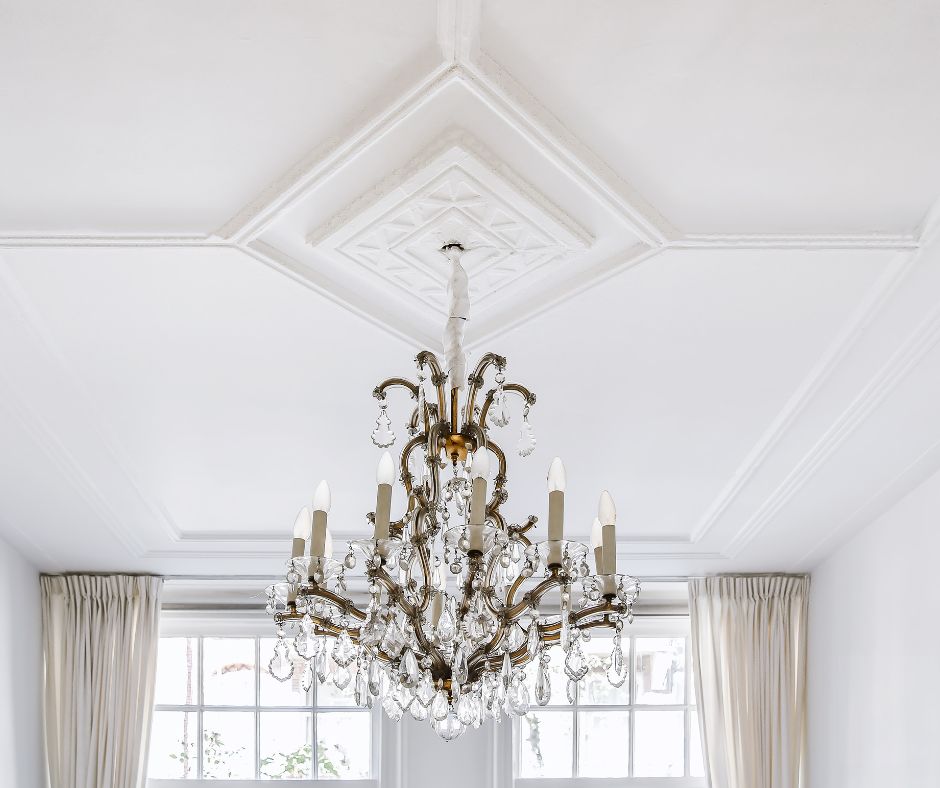
There are limits. If the ceiling around the rose is sagging or has to be replaced, saving the original gets harder, and sometimes a matching replacement is the more sensible answer. If you’re dealing with a ceiling that has started to drop, our post on fixing a sagging ceiling explains what’s involved.
Decorative restoration is part of our renovation and restoration plastering, and older homes that still have their original features are the work we enjoy most.
Protecting ceiling roses during a renovation
The biggest risk to an original ceiling rose is usually the renovation itself. Rewiring, new lights, ceiling repairs and a house full of trades all put it in harm’s way, so plan for it before work starts:
- Tell every trade the roses are staying: put it on the plans and in the quotes, so nobody pulls a rose down to get at the wiring.
- Sort out the lighting early: if the pendant is moving, or you’re switching to downlights, decide what happens to the rose before the electrician starts. A rose can stay as a decoration with no light hanging from it.
- Keep heavy fittings off the plaster: a plaster rose is decoration, not a fixing. A heavy chandelier or a ceiling fan needs to be fixed back to the ceiling framing.
- Test before anyone cuts: if your house was built before 1990, Queensland’s asbestos website says there’s a good chance it contains asbestos, and to assume a material does until it has been tested.
If your home is listed as a local heritage place, check with council before original features come out. Brisbane City Council’s guidance on heritage and character properties says alterations to a local heritage place shouldn’t change, remove or conceal features in a way that would diminish what’s significant about the place.
Plaster or PU ceiling roses for modern homes and replacements
If the original rose is gone or can’t be saved, you’ll be choosing between plaster and PU (polyurethane). In an older home with plaster cornices, a plaster ceiling rose is usually the better match. In a modern home, a PU ceiling rose in a simple design can work well.
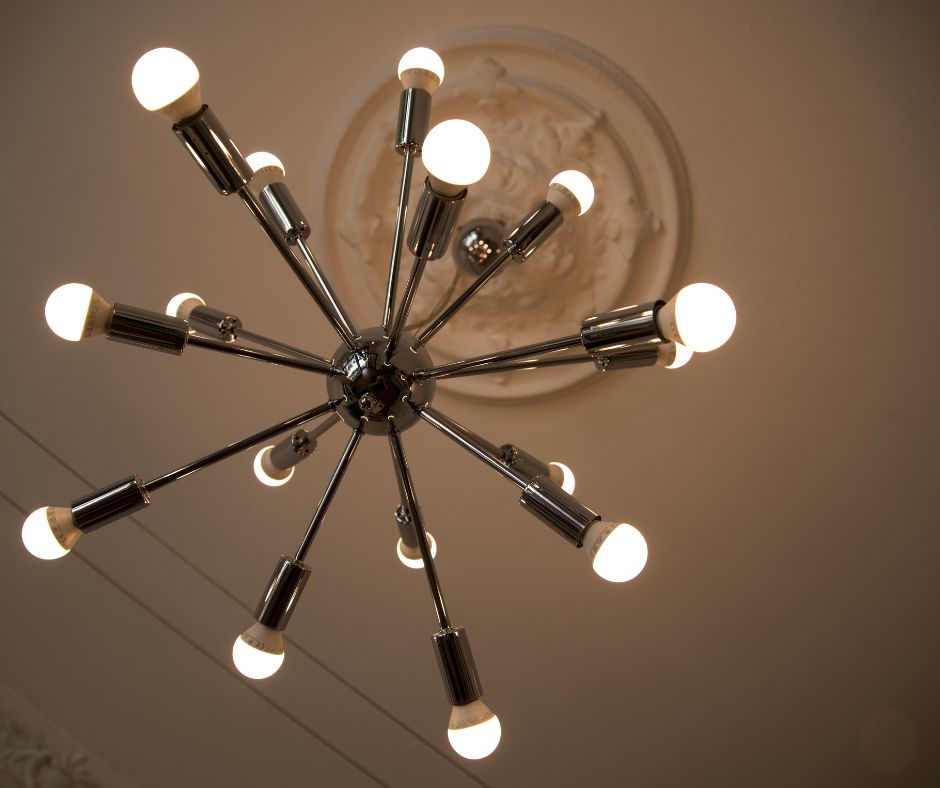
PU ceiling roses are moulded from a lightweight rigid foam and are usually fixed with adhesive. Being light makes them easy to put up, and they cope well with humid rooms like bathrooms. Plaster ceiling roses are cast and heavier, with the feel of an original. The detail tends to be crisper, they take paint the same way the rest of a plaster ceiling does, and they can be repaired the way old plaster can.
For modern homes, the shape matters more than the material. A flat or lightly stepped rose with a clean geometric edge suits square set ceilings and plain walls far better than a busy floral pattern. If it’s the plaster flower designs from older homes you’re after, a cast plaster rose will look closest to the real thing.
Choosing the size and style of a new rose is a separate decision, and our guide to choosing cornices and ceiling roses covers how to match a rose to the ceiling height and the cornice.
Painting a plaster ceiling rose
Paint a plaster ceiling rose in thin coats, using the ceiling colour unless you want it to stand out. Heavy coats are how old roses end up clogged in the first place, so fewer, thinner coats keep the pattern sharp for longer.
The usual choice is the same white as the ceiling, which lets the shadows in the pattern show the detail. Picking it out in a second colour, or even a metallic, is a bolder look some owners like in a formal dining room. A matt finish hides small imperfections in old plaster, while gloss and semi-gloss show them up.
Frequently asked questions about plaster ceiling roses
What is a ceiling rose used for?
A plaster ceiling rose is the decorative round piece on the ceiling around a pendant light or chandelier. It frames the light, hides the hole and rough edges where the fitting comes through, and breaks up a high ceiling. Electricians also call the small fitting that joins a pendant cord to the house wiring a ceiling rose, so check which one you mean before you ask a tradesperson.
Can an old plaster ceiling rose be repaired?
Often, yes. Paint build-up can be cleaned out of the detail, hairline cracks filled, and a rose that has moved can be fixed back to the ceiling. Small broken pieces can sometimes be rebuilt to match. If the ceiling around the rose is sagging or badly water damaged, the ceiling has to be dealt with first, and in some cases a matching replacement makes more sense.
Are PU ceiling roses good for modern homes?
They can be. PU ceiling roses are light, easy to put up and cope well with humid rooms, and a simple geometric design suits a modern home with square set ceilings. In an older home with original plaster cornices, a cast plaster rose is usually the better match, because the detail and the paint finish look closer to the original plasterwork.
Should I keep my ceiling roses if I’m putting in downlights?
You can. A ceiling rose works as a decoration on its own, so it doesn’t need a pendant hanging from it. Some owners keep a pendant in the main rooms and use downlights elsewhere. Decide before the electrician starts, so the new lights are placed around the rose rather than through it, and make sure everyone on site knows the rose is staying.
Can a plaster ceiling rose hold up a chandelier?
Not on its own. A plaster ceiling rose is decorative, and it isn’t designed to carry weight. A chandelier or a ceiling fan needs to be fixed back to the ceiling framing, with the rose sitting around the fitting as a finish. If you’re planning a heavy light, talk to your electrician about the fixing before the ceiling and the rose are finished.
If you’re renovating and want to keep your ceiling roses, or one needs repairing or replacing, contact us for a free quote. Tell us what you’ve noticed and where, and send a photo of the rose if you can.