
If your ceiling is sagging badly, stained from a leak or just looking tired, replacing it can give you a better result than patching it again. A ceiling replacement is also your chance to choose a plasterboard that suits the room and a finish you’ll be happy looking up at.
Here’s what you need to know before you replace a ceiling.
Ceiling replacement: when a new ceiling makes more sense than a repair
A ceiling replacement makes sense when the plasterboard can’t be saved or isn’t worth saving. These are the usual reasons:
- A long-term sag: sheets that have curved downwards for a long time keep the bow and won’t sit flat again when they’re refixed.
- Water damage: plasterboard soaked by a roof leak or a Brisbane storm goes soft, stains and can swell.
- Repeat repairs: if the same ceiling keeps cracking or dropping, the board or its fixings may have had their day.
- A renovation: if you’re changing the layout, lighting or style of a room, a new ceiling saves working around old damage.
Not every sagging ceiling needs replacing. A section that has only started to drop can often be screwed back up, and our guide on how to fix a sagging ceiling explains how to tell the difference. Where the damage is limited to one area, we can remove the damaged section, replace the plasterboard and set it to blend in with the rest of the ceiling.
What’s involved in replacing a ceiling
Replacing a ceiling starts with taking the old one down. The old plasterboard and cornice are removed and the ceiling framing is checked. If the timbers aren’t spaced correctly for the new board, extra timbers go in, and any damage to the supporting walls is repaired before the new ceiling goes up. If the old ceiling came down because of a leak, the roof or plumbing needs fixing first.
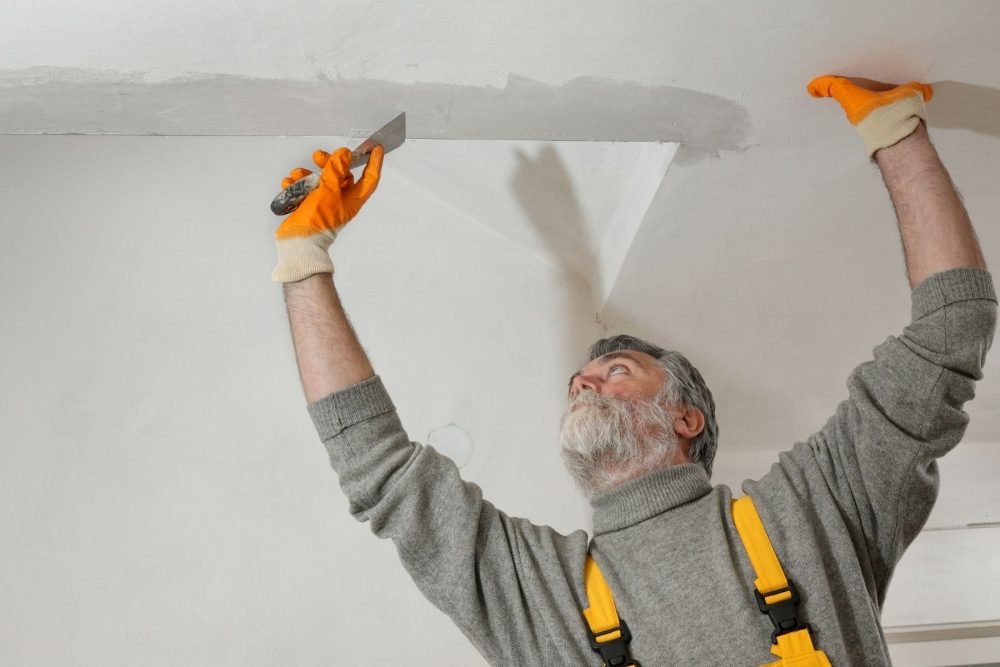
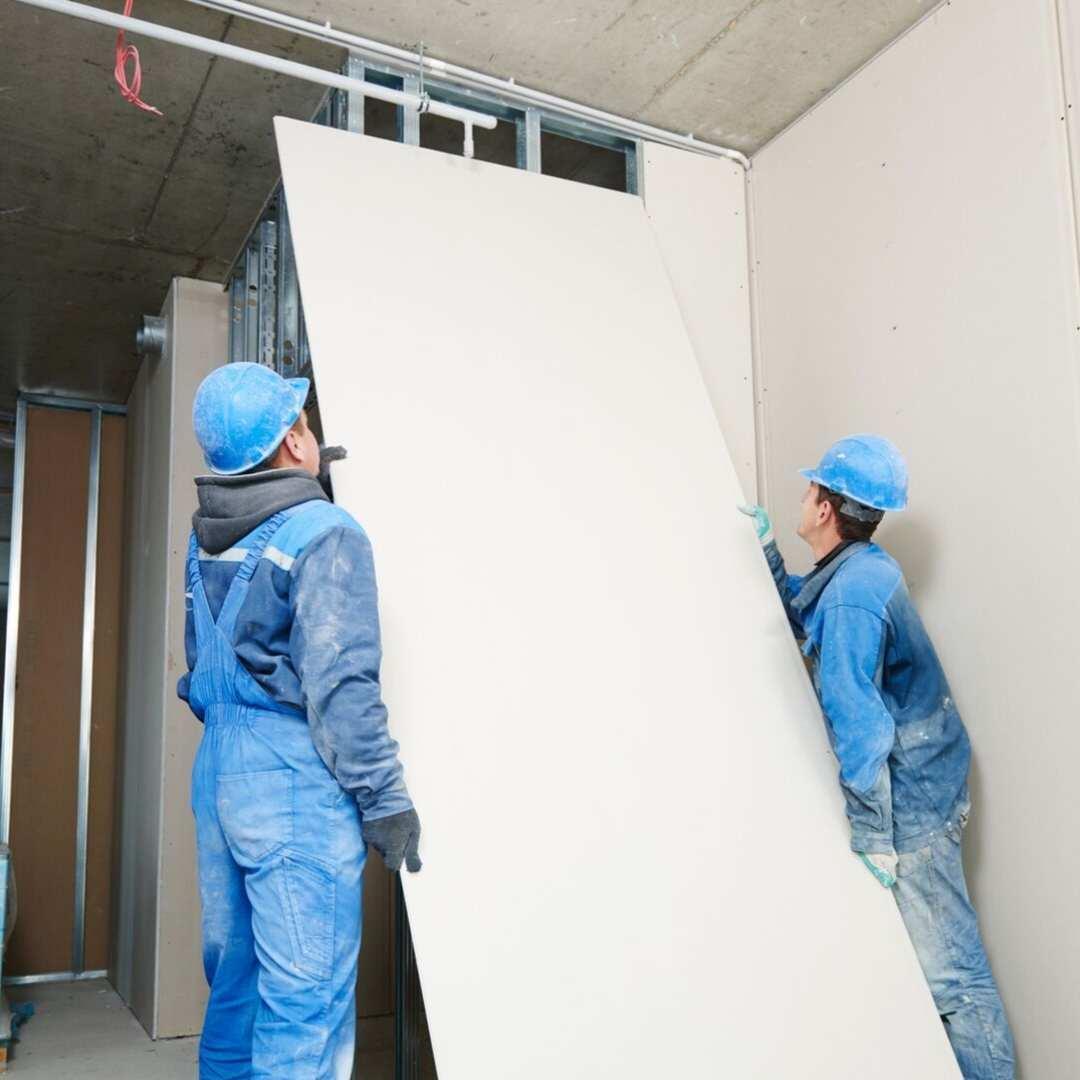
Then the new plasterboard is fixed to the frame, the joins and fixings are set, and the new cornice goes in. We install, set and sand the new ceiling to a smooth finish, ready for paint. Plastering is messy work, especially when a ceiling comes down, so we do everything we can to protect your home and clean up before we leave.
Choosing ceiling plasterboard for Brisbane homes
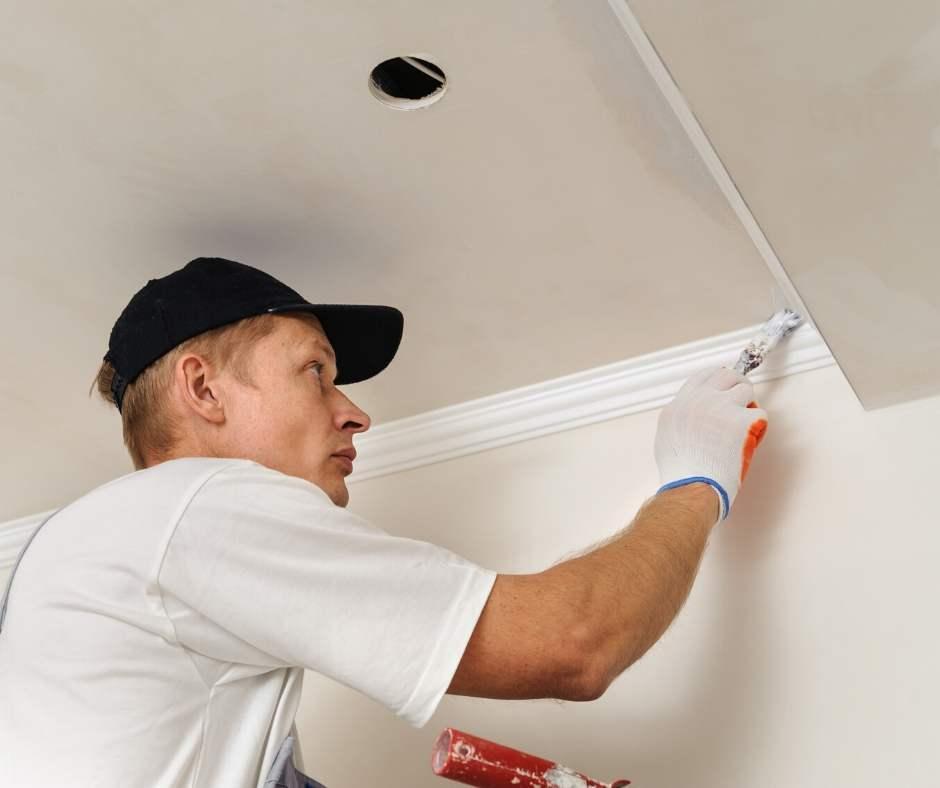
Brisbane’s heat and humidity affect how a ceiling looks over time, and the standard plasterboard used for walls isn’t as durable overhead as other options. Plasterboard makers produce ceiling boards that are lighter than standard board but stronger, so they stay flatter between the timbers. Gyprock’s ceiling board is one of them, and we like the crisp finish it gives a ceiling.
Ceiling board suits bedrooms, living areas and hallways, but it isn’t made for rooms with high moisture. Bathrooms, ensuites and laundries get a moisture-resistant plasterboard made for wet areas instead. We match the plasterboard to each area of the home and how that room is used.
Planning a new ceiling around downlights, fans and insulation
If you’re replacing a ceiling, plan the lighting, fans and insulation at the same time. One reason ceilings sag is weight the plasterboard has to carry. Insulation that wasn’t installed properly can end up resting on the back of the sheets. New downlights and ceiling fans add weight and cut holes in the board. Ceiling joists spaced too far apart make it worse, because the sheets have less support between them.
It’s much easier to add a timber where a fan will hang, or correct the spacing of the framing, while the old ceiling is down than after the new one is finished.
Ceiling renovation ideas: cornices and finishes
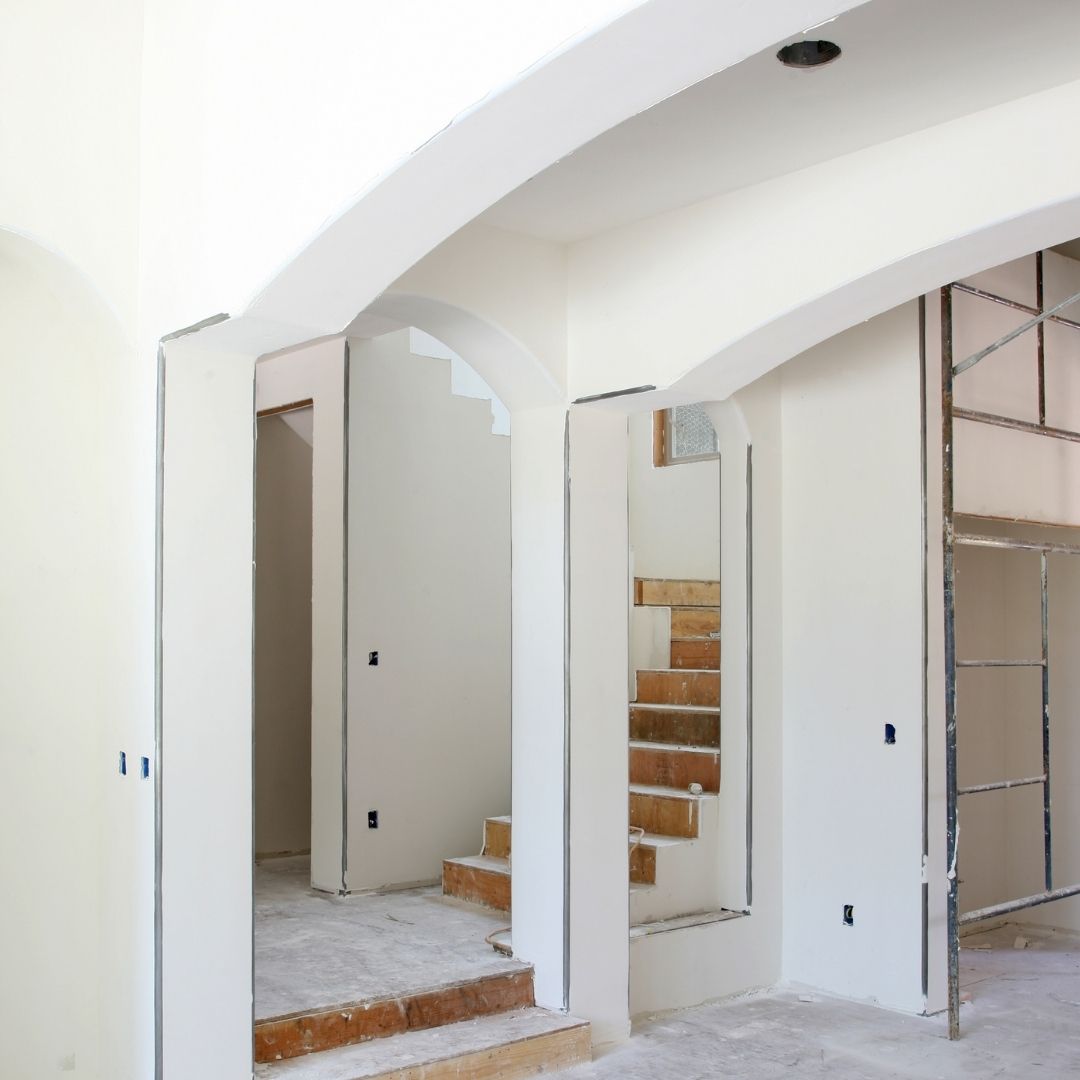
The main ceiling finishes are a plain ceiling with a cornice, a square set ceiling, a shadow line ceiling, or decorative cornices, roses and panels in a character home.
Plain ceilings with a cornice
A plain plasterboard ceiling is the most common style, and sometimes the only option when there isn’t much height to work with. It’s usually painted white or the same colour as the walls. A cornice finishes the join between the wall and the ceiling and stops gaps from showing along that seam. A simple cove cornice is the standard choice and makes the join look finished in most rooms.
Square set ceilings
If you don’t want a cornice, a square set ceiling gives a sharp, clean line where the wall meets the ceiling. It’s an added expense compared with a standard cornice, but it suits a modern, minimalist room.
Shadow line ceilings
A shadow line leaves a small recessed gap around the edge of the ceiling, which makes it look like it’s floating. A shadow line bead has to be installed before the plasterboard goes up, so decide on it before the ceiling replacement starts.
Decorative cornices, ceiling roses and ceiling panels
In a character home, the ceilings and cornices are a big part of the look. Many older Brisbane homes have high ceilings, and ornate cornices, ceiling roses and decorative plaster panels make the most of them. Decorative ceiling panels come pre-moulded and unpainted, and they take some skill to lay well. There’s a huge range of cornice designs to choose from, and our renovations and restorations page has tips on matching a cornice to the era of the home and the height of the ceiling.
Asbestos in old ceilings: check before a ceiling replacement
Pulling down an old ceiling disturbs every sheet in it, so find out what it’s made of first. The Queensland Government advises that if your house was built before 1990, there is a good chance it contains asbestos, and that if you’re not sure about a material, you should assume it contains asbestos until a sample is tested by an accredited laboratory.
The size of the ceiling matters too. According to the Queensland Government’s asbestos FAQs for homeowners, a tradesperson removing more than 10 square metres of bonded asbestos needs a class A or class B asbestos removal licence, and 10 square metres is about four sheets of asbestos cement wall sheeting. If testing finds asbestos in a ceiling bigger than that, plan for a licensed asbestos removalist to take the old ceiling out before the new one goes in.
The new plasterboard is a different story. The same page notes that asbestos and all products containing it have been banned throughout Australia since 31 December 2003, so the sheets in a new ceiling won’t contain it.
What affects the cost of a ceiling replacement
A ceiling replacement is quoted on the work involved, so it helps to know what moves the cost:
- Room size: more ceiling area means more sheets, more setting and more cornice.
- Removing the old ceiling: the old plasterboard, cornice and any wet insulation have to come down and be disposed of.
- Asbestos: an older ceiling may need testing, and licensed removal if asbestos is found.
- Framing repairs: extra timbers or repairs to damaged supporting walls add to the work.
- Board and finish: wet-area board, square set or shadow line, and decorative cornices or roses each change the price.
- Ceiling height and access: high ceilings in older homes take more setting up to work on safely.
Photos or plans of the room help us quote accurately, and some ceilings need to be seen in person first. Ceiling replacements are part of our residential plastering work across Brisbane, along with repairs to sagging, cracked and storm-damaged ceilings.
Frequently asked questions about ceiling replacement
How do I know if my ceiling needs replacing?
A ceiling usually needs replacing when the plasterboard has bowed for a long time and won’t sit flat, when it has been soaked by water and gone soft or stained, or when it keeps cracking and dropping after repairs. A ceiling that has only just started to sag can often be refixed instead. If you’re not sure, photos of the ceiling are a good place to start.
Can you replace just part of a ceiling?
Yes. If the damage is limited to one area, such as a patch under a roof leak, we can remove the damaged section, replace the plasterboard and set it to blend in with the rest of the ceiling. If the whole ceiling is sagging or the damage is spread across the room, a full ceiling replacement can give a more even finish than a series of patches.
What plasterboard is best for a bathroom ceiling?
Bathrooms, ensuites and laundries get a moisture-resistant plasterboard made for wet areas, rather than the ceiling board used in bedrooms and living areas. Steam that sits against the ceiling every day is hard on any board, so good ventilation helps too. If you’re renovating a bathroom in Brisbane, plan the ceiling board and the exhaust fan together.
Do I need a cornice with a new ceiling?
No, but most ceilings have one. A cornice finishes the join between the wall and the ceiling and stops gaps showing along that seam. If you’d rather not have a cornice, a square set ceiling gives a clean, sharp edge, though it’s an added expense. A shadow line is another option and gives the ceiling a floating look.
Does an old ceiling need asbestos testing before it’s replaced?
If your home was built before 1990, testing is worth doing first. The Queensland Government says you can’t tell whether a material contains asbestos by looking at it, and that a sample examined at an accredited laboratory confirms it. If asbestos is found and the area is more than 10 square metres, a tradesperson needs an asbestos removal licence to remove it.
If you’re thinking about a new ceiling, send us photos and a few details through our contact page. We’ll talk through the board, the finish and the cornice with you and give you a free quote.