
We get a lot of requests to quote on a new ceiling because the plasterboard has started to sag, but a sagging ceiling doesn’t always need replacing. If you catch it early, plasterboard that has only begun to come away from the ceiling timbers can usually be pushed back up and refixed. A ceiling that has bowed for years, gone soft from water or started to come down is a different story, and that one needs new sheets.
Here’s how to work out which fix your ceiling needs.
How to fix a sagging ceiling depends on how far it has dropped
The right fix for a sagging ceiling depends on how far the plasterboard has dropped, how long it has been like that and what caused it. A small section that has only just let go can be screwed back up to the timbers. A bigger area may need fresh adhesive from above and props underneath while it sets. Sheets that are badly bowed or have gone soft from water get replaced.
Whichever way you go, find the cause first. Screwing a ceiling back up won’t last if water is still getting in, or if something heavy is still sitting on the sheets in the roof space.
Warning signs of a sagging ceiling
A sag usually happens slowly, so it often isn’t noticed until the ceiling looks unsafe. These are the early signs to look for:
- Cracks along the cornice: fine cracks where the cornice meets the wall or the ceiling are often the first thing you’ll see.
- Shadows near the walls: a dip in the plasterboard catches the light differently, so a shadowed band can appear close to the walls.
- Popped fixings: small round bumps or cracks over the screw and nail heads mean the fixings are working loose.
- Water stains: brown or yellow marks mean water has reached the plasterboard from above.
There’s a simple test, too. Push gently up on the area that looks low. If you can move the ceiling upwards, the plasterboard has started to come away from the ceiling joists. (Gently is the word here. A loose sheet can crack if you shove it.) Cracks in the walls rather than the ceiling are a separate problem, and our guide to plaster repairs covers those.
Why plasterboard ceilings sag and plaster falls off the ceiling
Plasterboard looks light, but it’s a heavy material. On a wall, its weight is spread through the frame. On a ceiling, every sheet hangs from its fixings and adhesive, so the way it’s attached matters a lot more. Ceilings come away from the framework for these reasons:
- Poor original installation: not enough adhesive, too few screws or nails, or ceiling timbers spaced too far apart for the board.
- Weight in the roof space: anything resting on the back of the plasterboard pulls it down. We have seen carpet snakes in a roof cavity cause a sag several times.
- Water damage and moisture: a roof leak, storm water or damp in the cavity weakens the layers of the plasterboard and makes it swell.
- Movement in the frame: timber expands and contracts as the house moves, and the fixings can work loose.
- Vibration: nearby construction, train lines and even remote roller doors can shake fixings loose over time.
- Termites: if termites have damaged the ceiling timbers, a pest controller needs to treat them before the ceiling is repaired.
Poor installation is hard to pick early. A building inspector may notice problems with the spacing of the framework, but nobody can check the adhesive once the sheets are up.
Why a sagging ceiling gets worse and can collapse
Over time screws and nails loosen, the adhesive weakens and the boards start to come away from the timbers. Once one section lets go, the fixings and glue around it carry more of the load. They let go in turn, and eventually the whole length of the sheet can come away.
If a ceiling does come down, it brings the plasterboard, the insulation and years of roof dust with it, which is why a sag that keeps growing shouldn’t be left.
Ceiling repair options for a sagging ceiling
There are four ways to deal with a sagging ceiling, and the size of the sag decides which one suits yours.
Refixing a sagging ceiling caught early
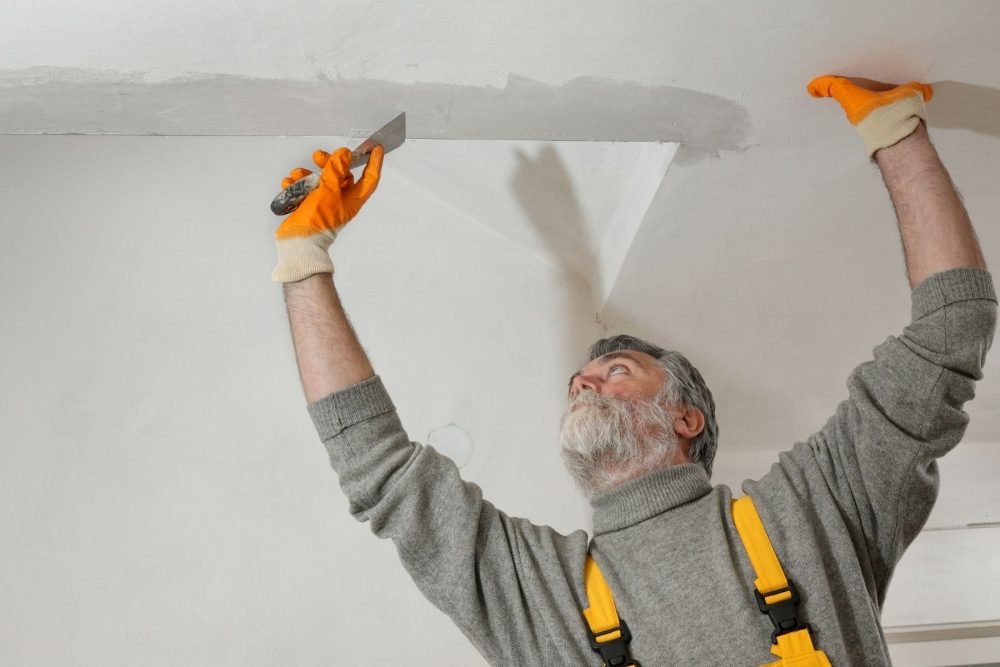
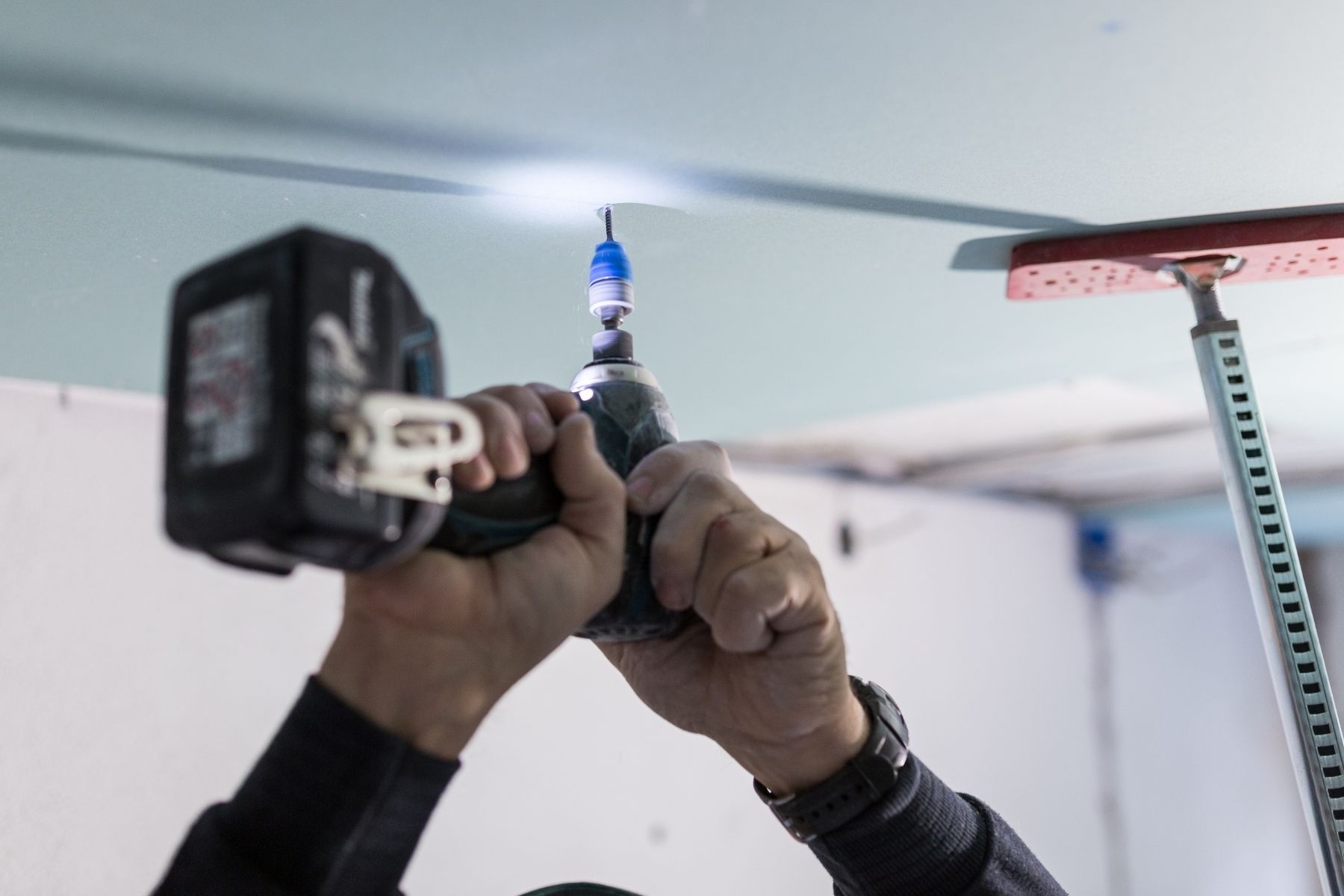
If the sag is limited to one small section, or it has been noticed early, the plasterboard can usually be screwed back up. New screws go through the sheet into the ceiling timbers and pull the board back into place. The screw heads are covered with plaster, and the ceiling is repainted once the patch is dry. It’s the smallest of the four repairs, which is why it pays to act when you first spot a sag.
Propping and re-gluing a bowed ceiling
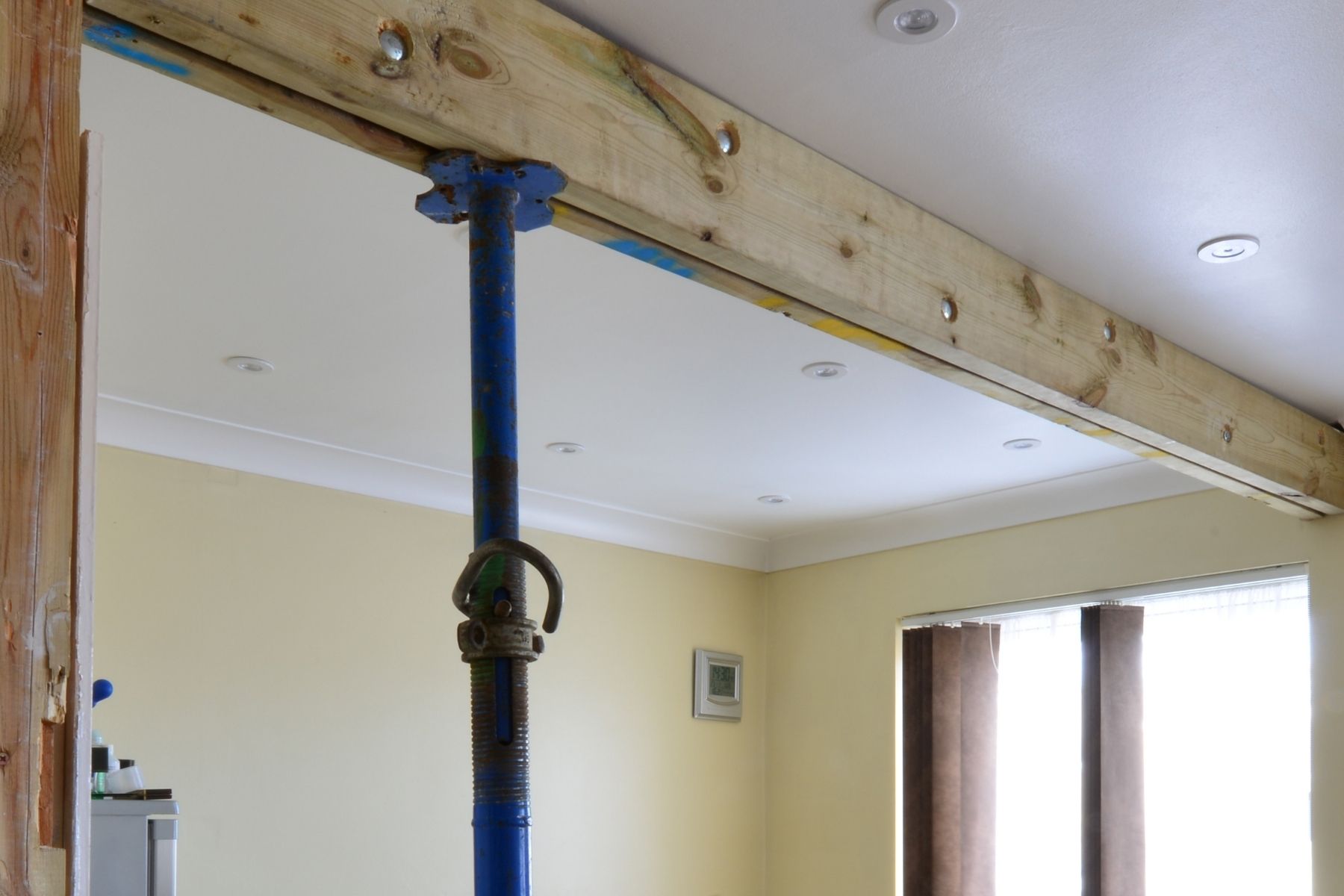
If new screws won’t hold, or they keep popping out, the plasterboard needs more help. Fresh adhesive goes onto the back of the sheets from up in the roof cavity, and the boards are screwed firmly from below. Battens or props then hold the sheets flat while the adhesive dries and the boards take on their new shape, so the room is out of action for a while. On a large area, weigh up the cost and time of this against replacing the ceiling linings, because replacement can work out easier.
Replacing a sagging ceiling
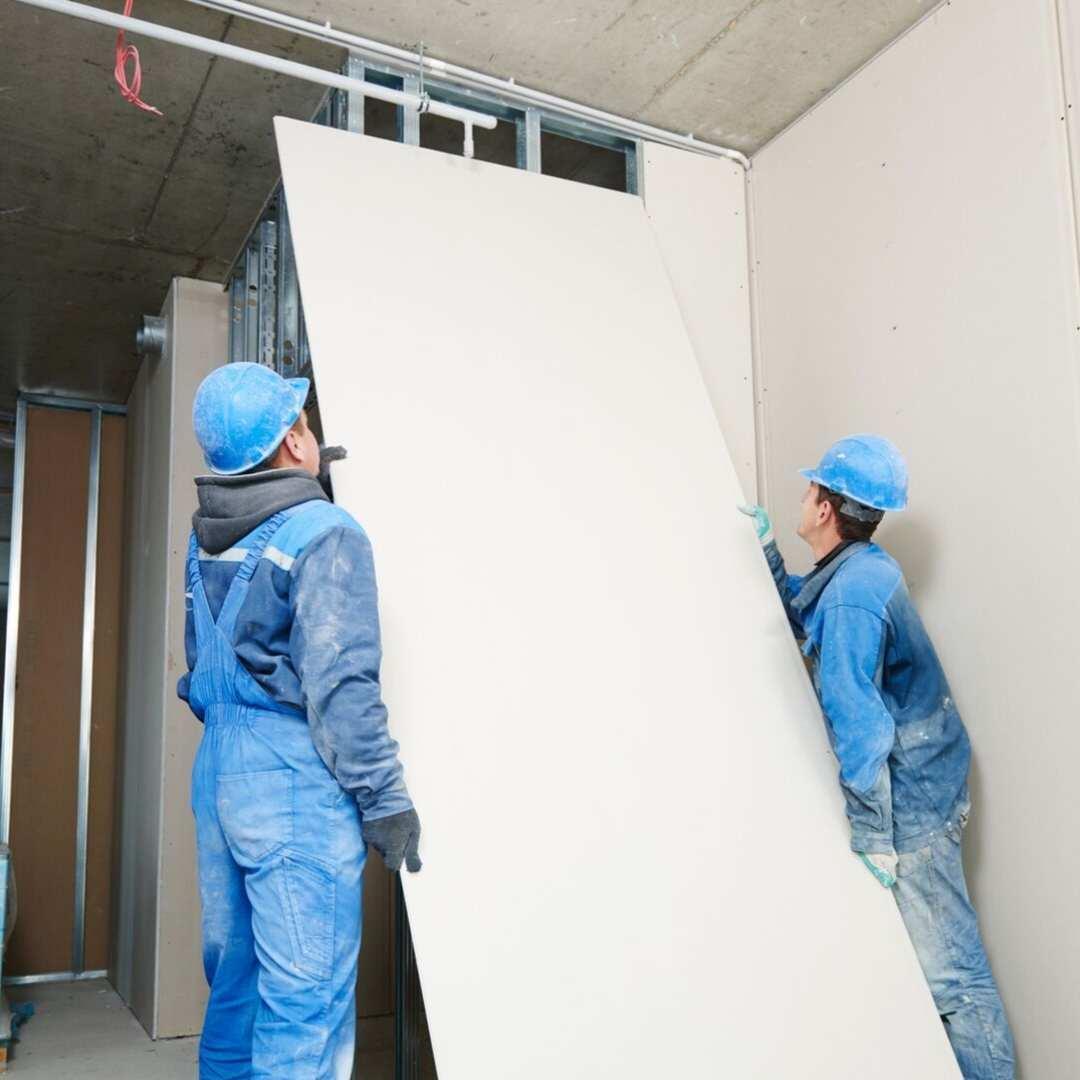
When the sheets have been curving downwards for a long time, they keep the bow. Screwing a badly bowed or water-softened sheet back up tends to crack it or leave a wavy ceiling, so a refix isn’t the answer for those. The ceiling needs replacing before it fails. The old plasterboard and cornice come down, damage to the supporting walls is repaired, and extra timbers go in if the framing isn’t spaced correctly. Then the new sheets and cornices go up. Our guide to getting a new ceiling covers board choices and finishes.
Building a new ceiling under the old one
If you have high ceilings, you can leave the existing ceiling in place and build a new ceiling underneath it. You lose some ceiling height, so it only suits rooms that can spare it. In return it saves time and mess, the existing insulation stays where it is, and there’s no old plasterboard to take to the tip.
Ceiling repairs in Brisbane: repair or replace?
When you have a problem with your ceiling, ask about repairing it as well as replacing it. Sometimes a repair is all a ceiling needs. Other times, replacing it is more cost effective, especially when the sag covers most of the room or water has been through it. The cost of ceiling repairs depends on:
- The size of the area: one loose sheet is a very different repair from a whole room.
- The repair method: refixing, propping and re-gluing, and full replacement each involve a different amount of work.
- The cause: a leak, termite damage or framing that needs extra timbers has to be dealt with as part of the repair.
- Access and finishing: high ceilings, matching the existing cornice and repainting all add time.
- The age of the home: an older ceiling may need testing for asbestos before anyone drills into it.
Photos of the ceiling help us quote accurately, and we’ll arrange to look at it in person where needed. Sagging ceiling repairs are part of our plastering services across Brisbane, along with new ceilings and storm or water damage replacements.
Sagging ceilings in older homes and asbestos
If your home is older, check what the ceiling is made of before anyone screws, drills or cuts into it. The Queensland Government says that if your house was built before 1990, there is a good chance it contains asbestos, and that bonded asbestos was often used inside homes for wall and ceiling sheeting, particularly in kitchens, bathrooms and laundries.
You can’t tell just by looking. The Queensland Government’s answers to homeowners’ asbestos questions explain that the way to confirm it is to have a sample examined at an accredited laboratory, and that power tools such as drills, saws and sanders should never be used on asbestos materials. If you’re not sure about your ceiling, get it tested before the repair starts.
Frequently asked questions about sagging ceilings
Can a sagging ceiling be fixed without replacing it?
Often, yes. If the plasterboard has only started to come away from the ceiling timbers, it can be screwed back up, and a larger area can be re-glued from above and propped until the adhesive sets. Replacement is for sheets that have bowed for a long time or been soaked through. Catching a sag early is what keeps the repair small.
Why does plaster fall off the ceiling?
Plaster comes off a ceiling when the fixings or adhesive holding the plasterboard to the timbers give way, or when the board itself is weakened. A leak, damp in the roof space, weight resting on the sheets, movement in the frame and poor original fixing are the usual causes. Once one area lets go, the strain moves to the fixings around it and the damage spreads.
What does it mean when a ceiling is bowing?
A bowing ceiling means the plasterboard has pulled away from the timbers above it and is curving down under its own weight. A bowed ceiling with no cracks is still worth checking, because the sheets can drop before the paint or the cornice cracks. Push gently on the low spot. If it moves upwards, the board is no longer firmly fixed.
Is a sagging ceiling dangerous?
It can be. A small sag that isn’t changing is a repair to plan for, but a ceiling that is wet, bulging or dropping further each week can come down and bring the plasterboard, insulation and roof dust with it. If you’re worried, keep people out from under the area, move furniture away and have the ceiling looked at as soon as you can.
If your ceiling has started to drop, the sooner it’s looked at, the more likely a simple repair will do. Send us a few details and photos through our contact page for a free quote on repairing or replacing it.